How To Review A Peptide Coa Genuine Vs Phony
By @chancewvoa278
Where Are Purity Results Typically Reported?
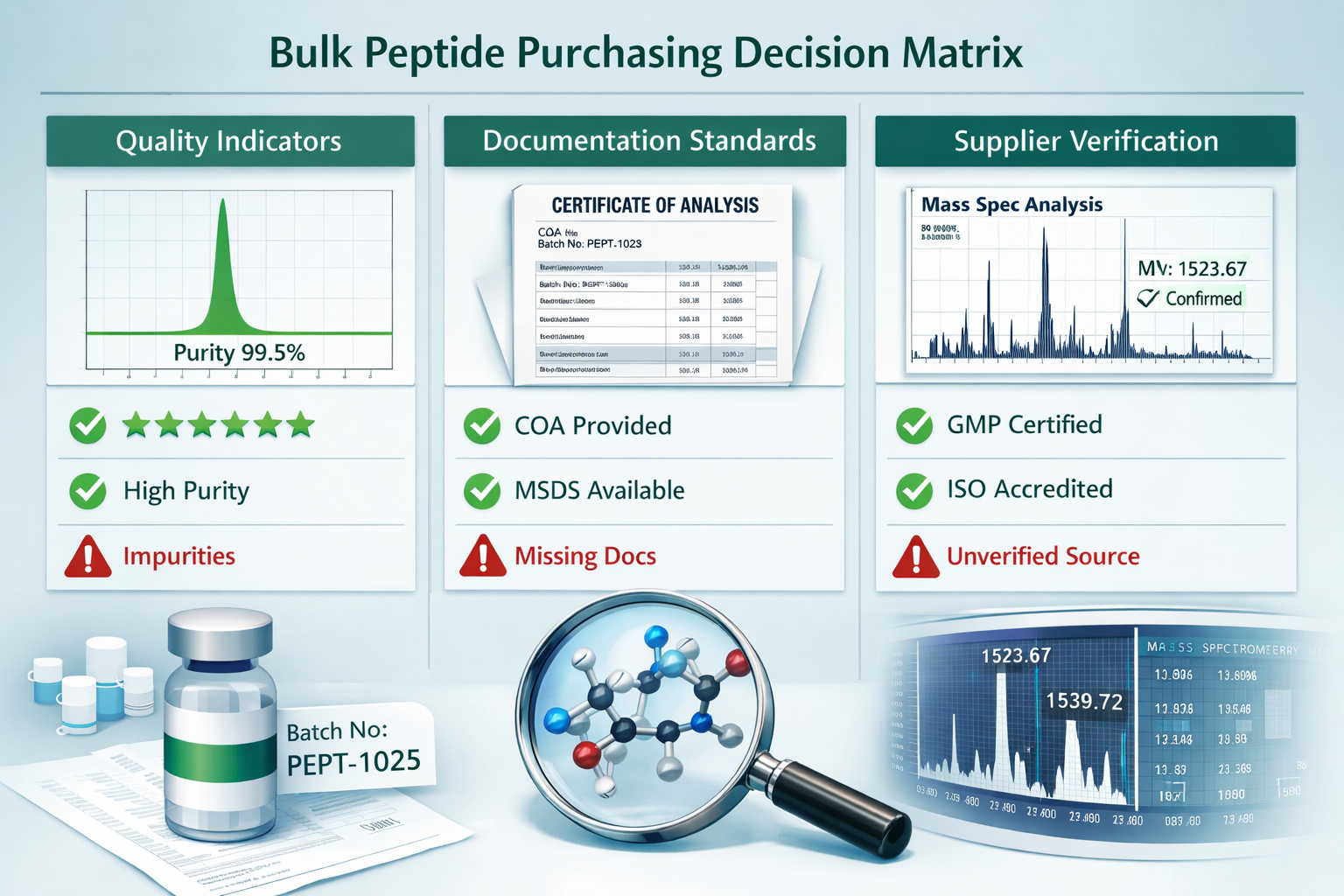
The pureness of peptides is figured out using analytical methods such as reversed-phase high efficiency liquid chromatography (RP-HPLC) and mass spectrometry (MS). Amino acid analysis can also be made use of to calculate yield or real quantity of peptide. Peptide pureness testing is one of one of the most vital components of study peptide quality assurance. These pieces are usually smaller sized than the target peptide and may elute at various retention times. HPLC can show the visibility of extra optimals; LC-MS can help appoint likely identifications to those associated types. Amino acid analysis or various other quantitative methods can support absolute material. Chiral approaches can resolve enantiomeric pureness where stereochemistry is an issue. Residual-solvent or water-content examinations can matter in manufacturing or stability contexts. These are important in the best setup, however they ought to be taken method-specific proof instead than an universal substitute for HPLC and MS.Sampling & Testing
Is 95% purity good for peptides?
Peptides with an 85% purity level or greater are typically made use of in enzyme assays or biological activity researches. Peptides with pureness higher than 95% are superb for quantitative evaluation.
- Testing usages Inductively Combined Plasma Mass Spectrometry (ICP-MS), which can find even trace levels of metals.
- When reviewing a peptide vendors listing, researchers must focus on vendors that provide extensive analytical data.
- Peptide pureness testing data are obligatory in preclinical researches and have to be included in investigational brand-new medicine (IND) applications and later brand-new medication applications (NDAs).
Corrections
Spot something wrong? Send it to the desk and it gets fixed in the open.